
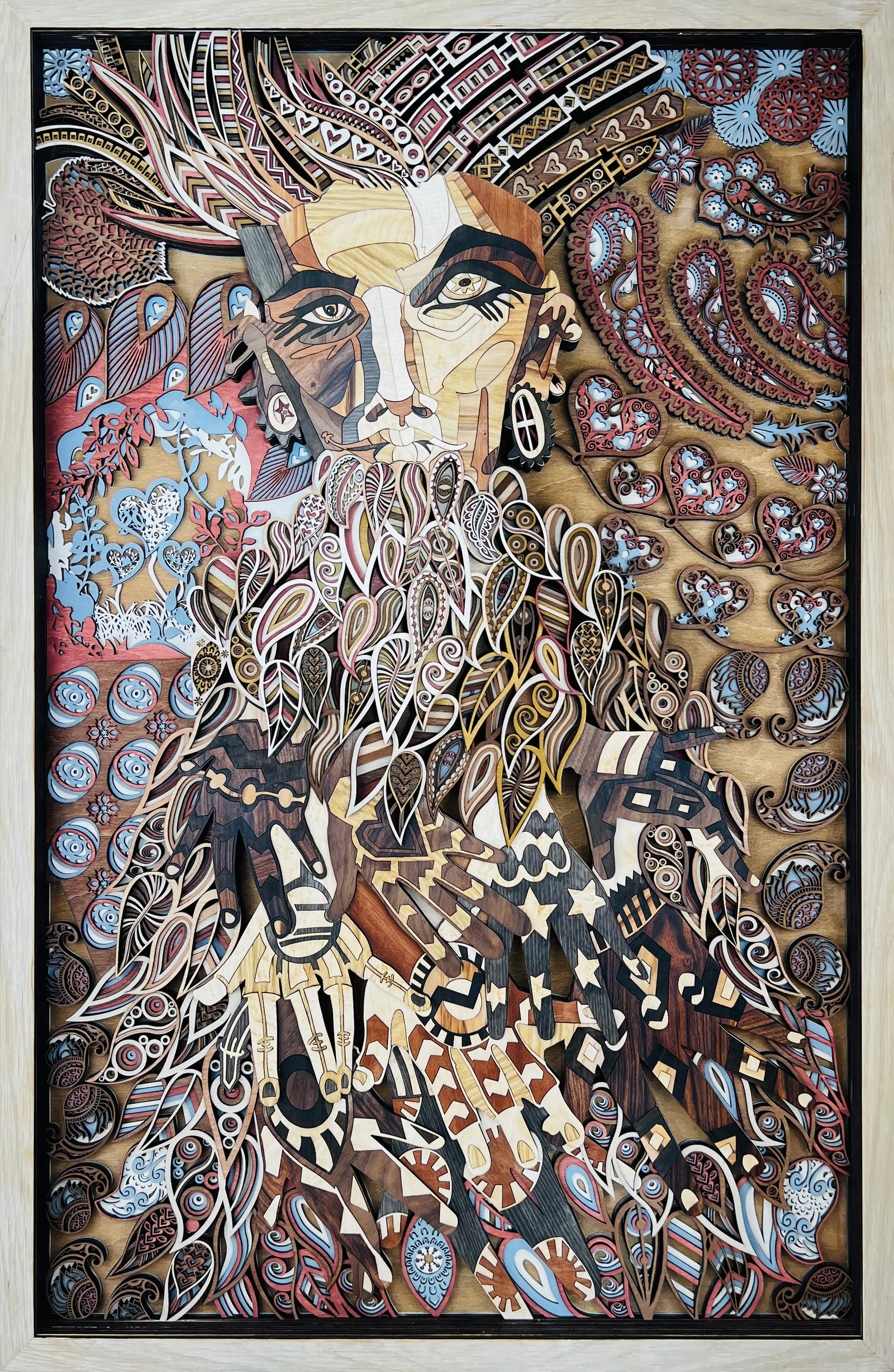
Half a year—that is how long it can take from a spark of inspiration to a full-bodied creation. In the studio, amid the scent of sawdust and varnish, the journey of crafting an Anthousai nymph from mythology into layered wooden reality was arduous and deeply personal.
Inspiration drawn from mythology
The Anthousai are the flower nymphs of Greek mythology: spirits of flowers and nature. Their grace and connection to the natural world became a powerful muse, a beauty and complexity that demanded translation into wood.
From concept to design
Every piece of wood selected, every curve planned in Illustrator and every layer considered became a step in a complicated dance. The challenge was not only making each part fit, but ensuring that the result felt alive.
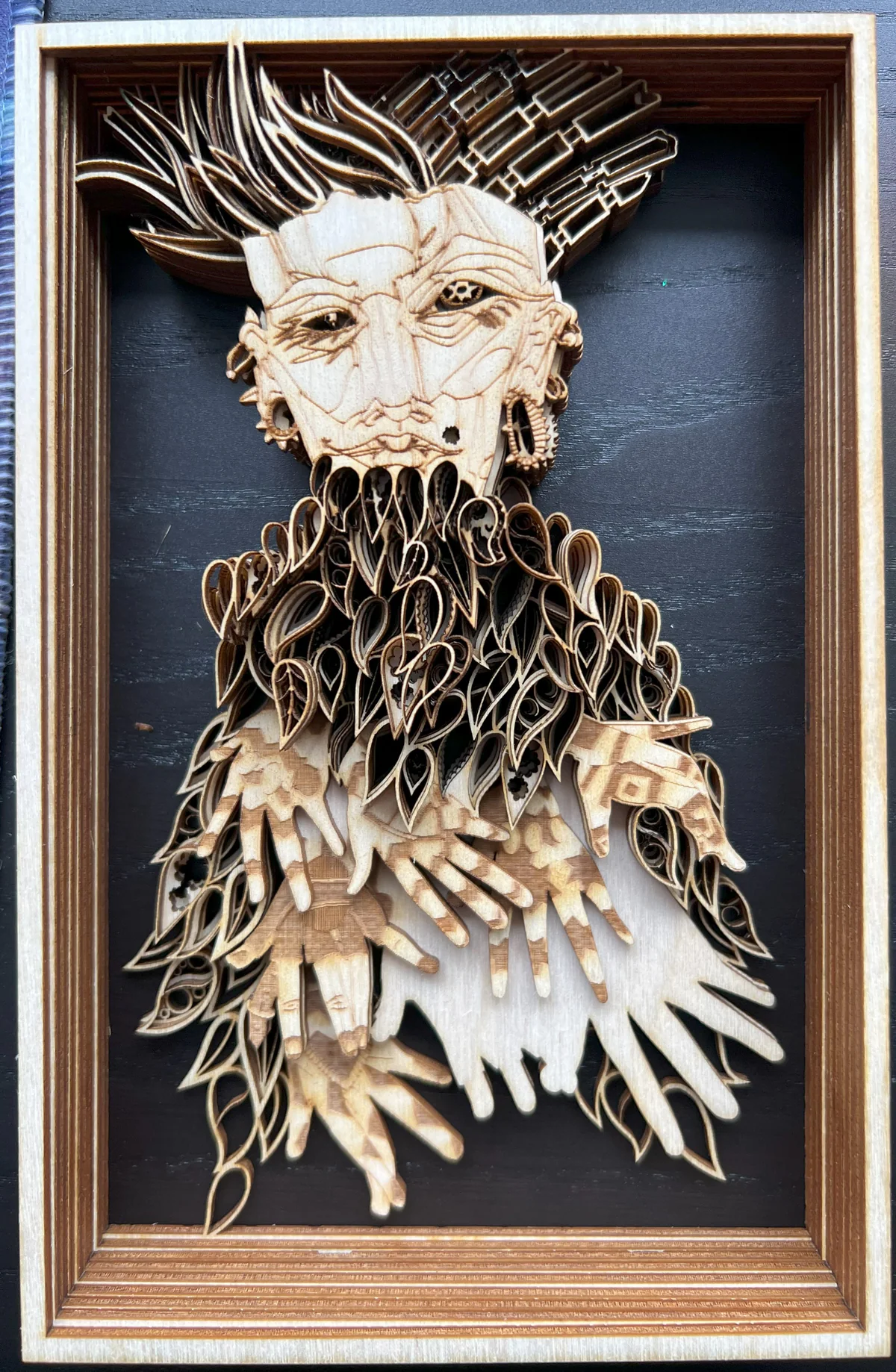
The earliest cuts explored how the base layers could attach directly to the frame. They were not beautiful. The concept had merit, but revealing it required many iterations and the willingness to keep working through disappointing results.
One early test found an unexpected champion: Maj’s young daughter coloured it in and treasured it. Her joy became a reason to continue.
The mastery of layering
The true challenge was translating a two-dimensional drawing into a multi-layered, three-dimensional structure. More than fifteen layers had to interlock, connect to the frame and sit accurately over what came before.
As the design gained detail, the face, flowers and background began to hold attention. This is the crucial point in a long process: the moment when an experiment starts to suggest that it could become remarkable.
Colour—and the decision to step back
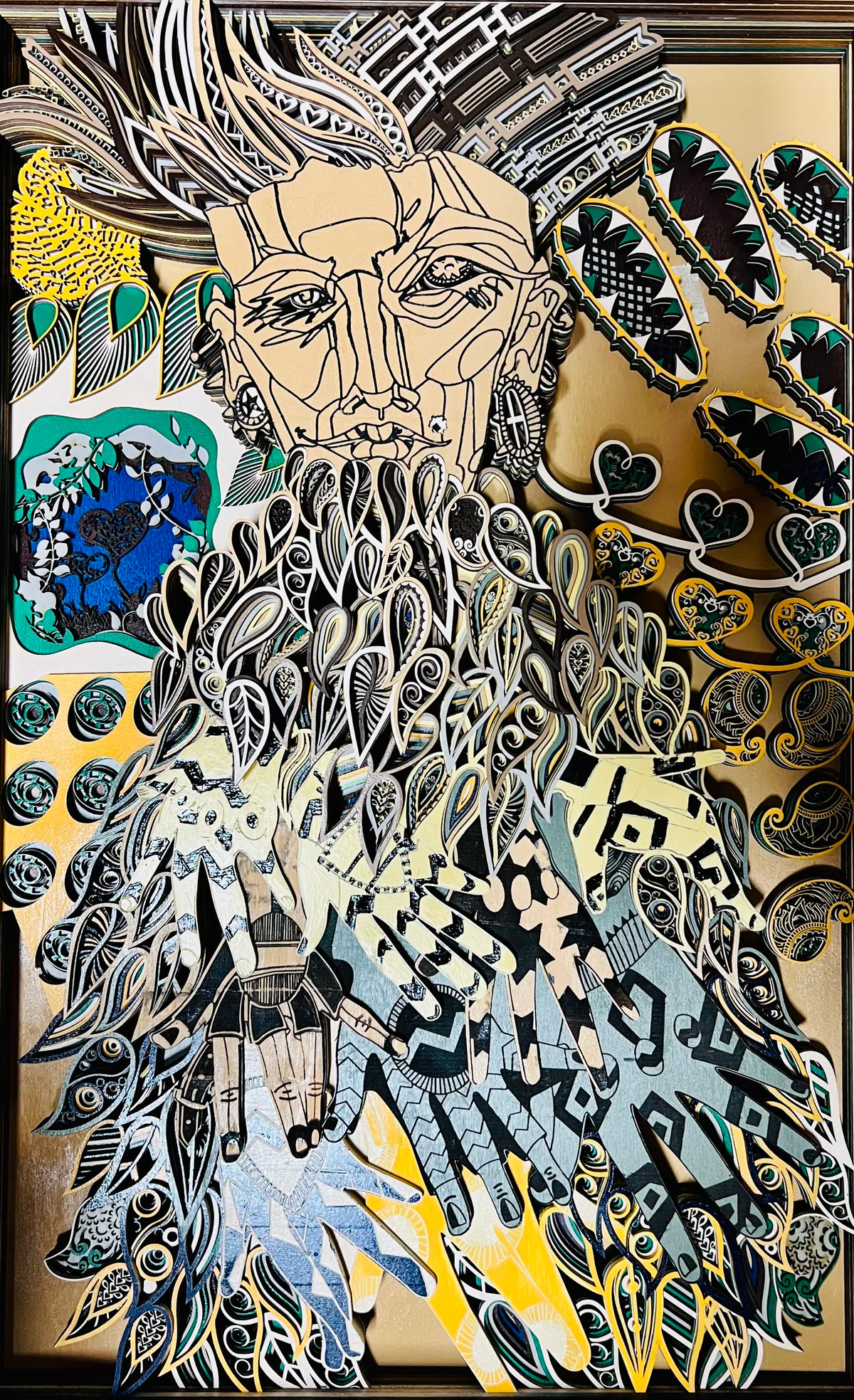
A bold experiment with spray paint brought the early layers to life, but the result felt disconnected from the studio’s natural wood language. Vibrancy alone was not enough.
The direction changed. The work needed to honour wood more completely, allowing grain, natural tone and dimensional shadow to carry deeper meaning.
Marquetry: the soul in the wood
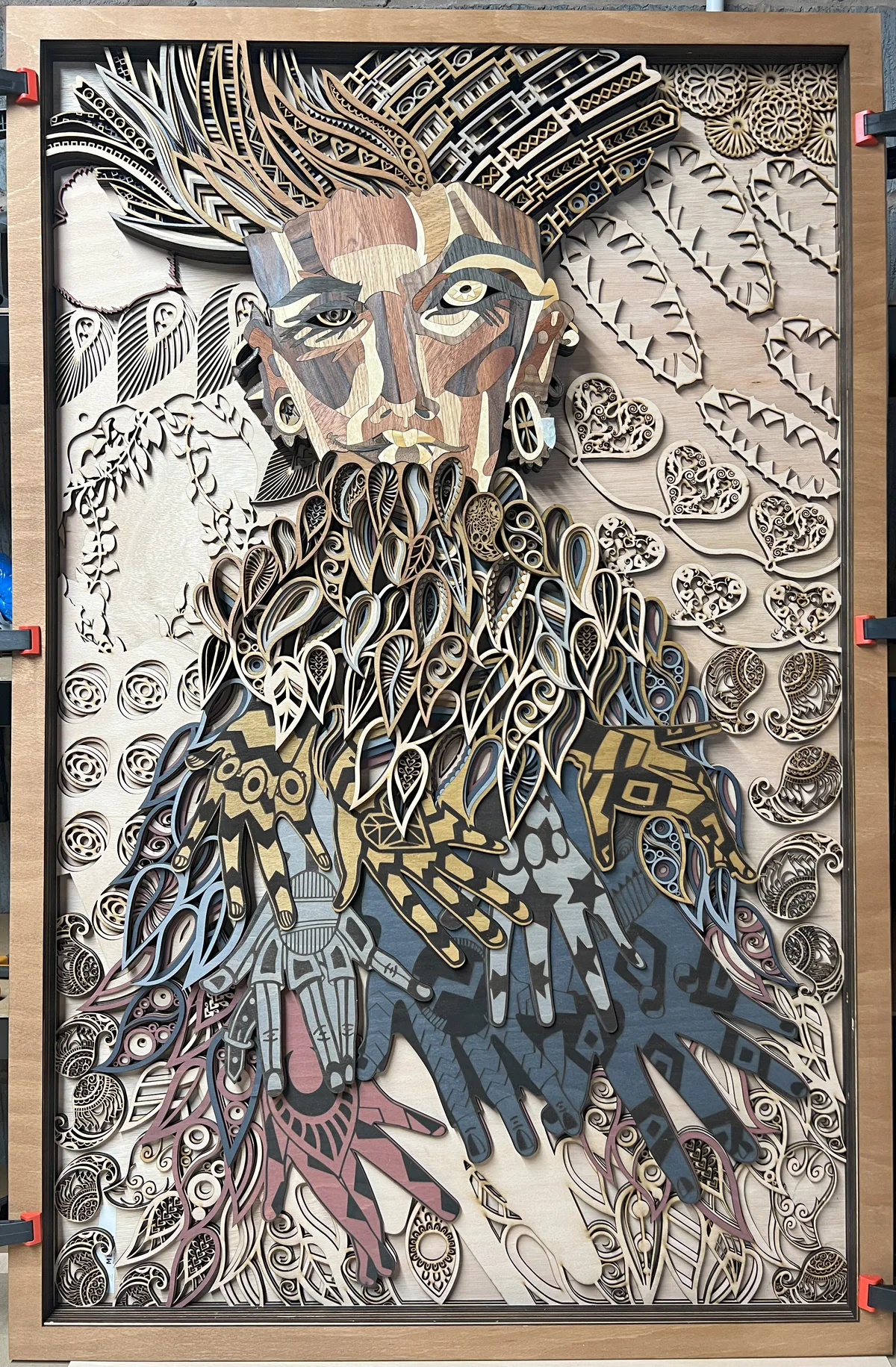
Marquetry has a timeless allure. Natural grains and colours are pieced together to form imagery, and the painstaking process connects the present with a craft found across centuries and cultures.
Every veneer must connect with the wider piece. The grain should emphasise the mood, the tone must flow, and light and shadow must give the face expression. Finding the right piece for the right place is more than a mechanical process—it is a form of respect for the material.
The difference between an engraved face and genuine veneer marquetry was decisive. Real wood gave the figure warmth, variation and the ability to change under different light.
Precision of CO₂ laser cutting
CO₂ laser cutting sliced the wood with astonishing precision, creating details and delicate patterns that would be almost impossible by hand. After cutting, every layer still needed a finish that connected it to the layers around it without washing out the design.
Many colour combinations were rejected. The final balance lets the intricate patterns remain distinct while belonging to one composition.
The final touches: gluing and framing
With every piece cut, coloured and veneered, assembly began. The layers were glued with exact alignment so the integrity of the drawing survived its transformation into depth. The complete artwork was then framed in real wood veneer.
An artist’s pledge
The finished background, marquetry hands and face made the figure flow. Vibrant colour allowed the layers to stand apart, while natural grains kept the whole work grounded.
At 1192 mm high and 780 mm wide, Anthousai Nymph commands attention. The installed piece finally brought a sense of pride without the nagging imperfections of earlier versions.
This is not factory production. It is the result of time, patience and a real artist’s passion in the United Kingdom. The greatest hope is that it finds someone who will treasure it with the same intensity.